

















![How Much Does It Cost to Rent an Excavator? [2026 Prices]](https://res.cloudinary.com/dsfzcj5qk/image/upload/f_auto,c_limit,w_450,q_auto:low/blog/cost-guides/excavator-rental-cost.jpg)
![How Much Does It Cost to Rent an Excavator? [2026 Prices]](https://res.cloudinary.com/dsfzcj5qk/image/upload/f_auto,c_limit,w_1000,q_auto:low/blog/cost-guides/excavator-rental-cost.jpg)


How Much Does It Cost to Rent an Excavator? [2026 Prices]
By Paolo Di Donato, Head of Sales at DOZR | Updated March 2026
The average excavator rental cost is $719/day, $2,021/week, or $5,108/month, based on 1,193 rental quotes across the U.S. and Canada. But that national average hides a wide range — a mini excavator rental cost runs $150–400/day, while a 50-ton machine can exceed $3,000/day. The size of the excavator you need is the single biggest factor in what you'll pay.
From pool digs in suburban backyards to highway pipeline trenches, excavators cover more ground than any other rental category on DOZR. Whether you're digging a pool in a residential backyard or moving thousands of cubic yards on a highway project, there's a size class built for the job. This guide breaks down real pricing data by size, city, and rental duration so you can budget accurately before you book.
Average Excavator Rental Costs
Rental pricing follows a predictable pattern: the longer the rental period, the lower the effective daily rate. A monthly rental saves roughly 60–65% compared to renting at the daily rate.
| Rental Duration | Average Cost | Effective Daily Rate |
|---|---|---|
| Daily | $719 | $719 |
| Weekly | $2,021 | $289 |
| Monthly | $5,108 | $170 |
These averages span all size classes from 1.5-ton minis to 50-ton large excavators. Your actual cost depends primarily on tonnage — covered in the next section.
Price range across all sizes: $100–$5,000/day.
Three-day projects or longer? The weekly rate saves you hundreds. Past two weeks, the monthly rate is a no-brainer.
Excavator Rental Cost by Size Class
Equipment size is the biggest price driver. A 2-ton mini and a 40-ton excavator are fundamentally different machines with different transport requirements, fuel consumption, and earning potential for the supplier. Prices reflect that.
| Size Class | Weight Range | Daily Rate | Weekly Rate | Monthly Rate | Common Uses |
|---|---|---|---|---|---|
| Mini | 1.5–4 ton | $150–$400 | $450–$1,200 | $1,200–$3,200 | Residential, landscaping, utilities, tight spaces |
| Small | 5–10 ton | $400–$700 | $1,200–$2,100 | $3,200–$5,500 | Residential foundations, grading, utilities |
| Mid-size | 13–25 ton | $700–$1,500 | $2,100–$4,500 | $5,500–$12,000 | Commercial construction, road work, demolition |
| Large | 30–50 ton | $1,500–$3,000+ | $4,500–$9,000+ | $12,000–$25,000+ | Heavy commercial, mining, large-scale earthwork |
Mini Excavators (1.5–4 Ton) — $150–$400/Day
The most rented category on DOZR. Mini excavators handle the majority of residential and light commercial work. Sizes available include 1.5-ton, 2-ton, 3-ton, and 4-ton models. A 3-ton Kubota or Bobcat is the sweet spot for most contractors — enough digging power for trenching and pool excavation without needing a full lowboy trailer for transport.
Small Excavators (5–10 Ton) — $400–$700/Day
The step up from minis. These machines give you more dig depth (12–16 feet), greater bucket capacity, and the stability to work in harder ground conditions. Ideal for residential foundations, larger utility installations, and grading work where a mini would be undersized.
Mid-Size Excavators (13–25 Ton) — $700–$1,500/Day
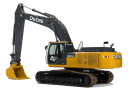
The standard for commercial construction sites. Available in 13-ton, 15-ton, 18-ton, 20-ton, and 25-ton configurations from manufacturers like CAT, John Deere, Komatsu, and Volvo. These machines deliver serious production — 20+ foot dig depths, large bucket capacities, and the power to handle demolition and road work. Transport requires a lowboy trailer and permits in most jurisdictions.
Large Excavators (30–50 Ton) — $1,500–$3,000+/Day
Reserved for major earthwork, mining, and large-scale demolition. Available in 30-ton, 35-ton, 40-ton, and 50-ton sizes. These machines need experienced operators and dedicated transport logistics. Fuel consumption alone can run $500+/day at full production.
Excavator Rental Cost by City
Rental rates vary significantly by market. The table below shows real average pricing from DOZR's marketplace data. Note that differences between cities are partly driven by the mix of equipment sizes rented — markets with more large excavator rentals (like Charlotte and Edmonton) show higher averages.
| City | Avg Daily | Avg Weekly | Avg Monthly | Data Points |
|---|---|---|---|---|
| Charlotte, NC | $1,285 | $3,349 | $8,454 | 36 |
| Asheville, NC | $1,128 | $2,869 | $6,770 | 30 |
| Edmonton, AB | $969 | $3,315 | $8,675 | 33 |
| Hamilton, ON | $806 | $2,842 | $7,268 | 18 |
| Phoenix, AZ | $766 | $2,116 | $4,988 | 36 |
| Toronto, ON | $664 | $2,447 | $7,034 | 63 |
| Oakville, ON | $625 | $2,021 | $6,021 | 45 |
| Mississauga, ON | $604 | $2,568 | $7,159 | 24 |
| Houston, TX | $550 | $1,420 | $3,322 | 48 |
| Geneva, WI | $571 | $1,464 | $3,500 | 18 |
| Port St. Lucie, FL | $455 | $1,401 | $2,833 | 21 |
| San Antonio, TX | $421 | $1,295 | $2,811 | 48 |
| Montpelier, VT | $412 | $1,578 | $4,727 | 45 |
| Waldorf, MD | $350 | $1,000 | $2,500 | 24 |
| Palm Coast, FL | $292 | $805 | $1,510 | 21 |
| Los Angeles, CA | $254 | $734 | $2,239 | 24 |
Why the gap between LA and Charlotte? Los Angeles averages $254/day while Charlotte averages $1,285/day — a 5x difference. This largely reflects the size mix: LA's sample skews toward mini excavator rentals, while Charlotte's includes a higher proportion of mid-size and large machines. Local supply and demand dynamics, fuel costs, and transport distances also play a role.
Canadian pricing note: Toronto, Oakville, Mississauga, and Edmonton prices are in CAD. Canadian markets tend to show higher monthly rates relative to daily rates, reflecting longer average project durations in those regions.
Mini Excavator Rental Cost
Mini excavators deserve their own section because they account for the largest share of rental searches — "how much to rent a mini excavator" and "mini excavator rental cost" generate 2–3x the search volume of generic excavator queries. If you're here for mini pricing, here's the breakdown.
Mini Excavator Pricing by Size
| Size | Daily Rate | Weekly Rate | Monthly Rate | Dig Depth |
|---|---|---|---|---|
| 1.5 ton | $150–$250 | $450–$750 | $1,200–$2,000 | 5–7 ft |
| 2 ton | $200–$300 | $600–$900 | $1,500–$2,400 | 7–9 ft |
| 3 ton | $250–$350 | $750–$1,050 | $1,800–$2,800 | 8–10 ft |
| 4 ton | $300–$400 | $900–$1,200 | $2,400–$3,200 | 9–11 ft |
The 2-ton and 3-ton models are the most popular rental sizes. They strike the right balance between digging capability and maneuverability — a 3-ton machine fits through a standard 36-inch gate opening (with the right model) and still delivers 8–10 feet of dig depth.
What Mini Excavators Are Used For
- Trenching — Water lines, sewer connections, electrical conduit, French drains
- Pool installation — A 3-ton or 5-ton mini handles most residential pool digs
- Landscaping — Grading, tree removal, retaining wall prep, drainage work
- Small utility work — Fiber optic installation, gas line repair, septic systems
- Foundation repair — Exposing footings, waterproofing, underpinning prep
Why Contractors Prefer Minis
Mini excavators dominate the rental market for practical reasons. They fit through residential gates and operate in backyards without destroying lawns (rubber tracks). Smaller models are towable behind a pickup truck, eliminating the $200–$600 delivery fee. And most importantly, the learning curve is shorter — an experienced equipment operator can be productive on a mini within an hour.
For homeowners and DIYers: many rental yards will rent 1.5- to 3-ton minis with basic orientation. Larger minis (4+ tons) and all full-size excavators typically require demonstrated experience.
Factors That Affect Excavator Rental Cost
Your final invoice depends on more than just the base rate. Here's what else factors in.
1. Equipment Size / Tonnage
Size is the dominant factor. A 40-ton excavator costs 10–20x more per day than a 1.5-ton mini. Always rent the smallest machine that can handle your project requirements — oversizing wastes money on the rate, fuel, and transport.
2. Rental Duration
Weekly rates save 50–60% on the effective daily cost. Monthly rates save 60–65%. If your project timeline has any uncertainty, book the longer duration — it's almost always cheaper than extending a short-term rental.
3. Attachments
Standard bucket is included. Specialty attachments add to your daily cost:
| Attachment | Additional Cost | Use Case |
|---|---|---|
| Hydraulic thumb | $50–$100/day | Grabbing rocks, logs, debris |
| Auger | $100–$200/day | Drilling post holes, pier footings |
| Hydraulic breaker | $150–$300/day | Concrete demolition, rock breaking |
| Compaction wheel | $50–$100/day | Trench compaction |
| Tilt bucket | $75–$150/day | Slope grading, ditch work |
4. Delivery and Pickup
Most excavators can't drive to your site. Delivery costs depend on machine size and distance:
- Mini excavators (under 4 ton): $200–$400 roundtrip
- Small to mid-size (5–25 ton): $300–$500 roundtrip
- Large (30+ ton): $500–$1,000+ roundtrip (requires lowboy trailer, possibly oversize permits)
Some suppliers include delivery within a radius. On DOZR, delivery pricing is quoted upfront so there are no surprises.
5. Fuel Consumption
Fuel isn't included in the rental rate. Budget accordingly:
| Size Class | Fuel Consumption | Daily Fuel Cost (est.) |
|---|---|---|
| Mini (1.5–4 ton) | 2–4 gal/hr | $50–$130 |
| Small (5–10 ton) | 4–6 gal/hr | $130–$200 |
| Mid-size (13–25 ton) | 6–12 gal/hr | $200–$400 |
| Large (30–50 ton) | 10–20+ gal/hr | $350–$700+ |
Fuel costs estimated at $3.50/gal (diesel) over an 8-hour operating day.
6. Ground Conditions
Soft, wet, or uneven terrain may require tracked excavators (standard) versus wheeled models. Wheeled excavators travel faster between work areas on hard surfaces but struggle in mud. Tracked machines handle virtually any ground condition but can damage finished pavement.
7. Operator Requirements
Most excavators over 5 tons require an experienced operator. Some jurisdictions require specific certifications. If you don't have a qualified operator on your crew, some rental suppliers offer operated rentals at an additional $400–$800/day for the operator.
8. Insurance
Rental insurance (also called loss damage waiver) typically adds 10–15% to the rental rate. Your existing commercial equipment policy may cover rentals — check with your insurer before paying for duplicate coverage.
Which Excavator Size Do You Need?
Match the machine to the project, not the other way around. Here's a quick reference:
| Project Type | Recommended Size | Why |
|---|---|---|
| Landscaping | 1.5–3 ton mini | Fits through gates, light enough for residential lawns |
| Utility trenching | 2–4 ton mini | Narrow footprint, sufficient dig depth for most utility lines |
| Pool excavation | 3–5 ton mini | Enough bucket volume to dig efficiently, small enough for backyards |
| Residential foundation | 8–15 ton | Deeper dig depth, enough power for compacted soil and rock |
| Land clearing | 15–25 ton | Handles stumps, large rocks, and heavy brush with forestry attachments |
| Road construction | 20–30 ton | Production-level digging for ditches, culverts, and grade work |
| Commercial demolition | 20–40 ton | Reach and breakout force for structural demolition, concrete removal |
When in doubt, size up one class. An undersized excavator on a job site burns more fuel, takes longer, and puts more stress on the machine. The marginal cost of the next size up is almost always less than the lost productivity of a machine that's too small.
Excavator vs. Backhoe: Which Should You Rent?
This is one of the most common questions on job sites. Both machines dig, but they're built for different workflows.
| Feature | Excavator | Backhoe |
|---|---|---|
| Rotation | 360° full swing | 180° limited swing |
| Dig depth | 10–40+ ft depending on size | 12–16 ft typical |
| Front attachment | None (excavator only) | Loader bucket included |
| Road travel | Requires trailer transport | Drives on roads (up to 25 mph) |
| Best for | Dedicated digging, deep excavation, demolition | Mixed tasks — dig, load, backfill, grade |
| Rental cost | $150–$3,000+/day | $300–$700/day |
Choose an excavator when the job is primarily digging — basements, trenches, demolition, mass excavation. The 360° swing and dedicated design make excavators faster and more efficient at moving dirt.
Choose a backhoe when you need a multi-tool — digging a trench, loading a truck, backfilling, and grading in the same shift. Backhoes are also the better choice when you need to move the machine between multiple locations on public roads without a trailer.
For a full breakdown, see our backhoe rental cost guide.
Should You Rent or Buy an Excavator?
For most contractors, renting an excavator makes financial sense unless you're using the machine 60%+ of the year. Here's the math.
| Factor | Rent | Buy |
|---|---|---|
| Upfront cost | $0 | $30,000–$500,000+ depending on size |
| Monthly cost (mid-size) | $5,108/month when needed | $3,000–$6,000/month (loan + insurance + maintenance) |
| Maintenance | Included in rental | $5,000–$15,000/year |
| Storage | None — returned after project | Yard space required |
| Depreciation | None | 15–20% per year |
| Flexibility | Rent the exact size for each job | Locked into one machine |
| Tax treatment | 100% deductible operating expense | Depreciation schedule |
Rent when: You need an excavator for fewer than 150–180 days per year, your projects require different size classes, or you don't want to tie up capital in a depreciating asset. Most general contractors and specialty subs fall into this category.
Buy when: You run an excavator 200+ days per year on predictable, repeating work. At that utilization rate, ownership costs drop below rental rates, and you build equity in the machine. Excavation-focused contractors and utility companies often reach this threshold.
The break-even point for a mid-size excavator is roughly 180 operating days per year. Below that, renting is cheaper. Above that, owning saves money — but you also take on maintenance risk, storage costs, and capital commitment.
Frequently Asked Questions
How much does it cost to rent an excavator?
The national average excavator rental cost is $719/day, $2,021/week, or $5,108/month based on 1,193 rental data points. Actual pricing ranges from $100/day for small minis to $5,000/day for large 50-ton machines, depending on size, location, and rental duration.
How much does it cost to rent a mini excavator?
Mini excavator rental costs range from $150–$400/day depending on size. A 2-ton mini averages $200–$300/day, while a 4-ton model runs $300–$400/day. Weekly and monthly rates offer significant savings — a 3-ton mini rents for roughly $750–$1,050/week or $1,800–$2,800/month.
What size excavator do I need?
Match the machine to your project: 1.5–3 ton for landscaping and light trenching, 3–5 ton for pool digs, 8–15 ton for residential foundations, 15–25 ton for land clearing, and 20–40 ton for commercial demolition and road work. When in doubt, size up one class to avoid productivity losses.
Do I need a license to operate an excavator?
No federal license is required to operate an excavator in the U.S. or Canada. However, OSHA requires that operators be trained and competent for the specific equipment they operate. Some provinces and municipalities require additional certifications. Most rental suppliers will rent mini excavators (under 5 tons) to homeowners with basic orientation, but larger machines typically require demonstrated experience.
How much does excavator delivery cost?
Delivery costs range from $200–$400 roundtrip for mini excavators to $500–$1,000+ for large machines (30+ tons) that require lowboy trailers and potentially oversize load permits. Distance from the supplier's yard is the primary cost driver. On DOZR, delivery pricing is included in your quote upfront.
What attachments are available for rental excavators?
Common rental attachments include hydraulic thumbs ($50–$100/day), augers ($100–$200/day), hydraulic breakers ($150–$300/day), compaction wheels ($50–$100/day), and tilt buckets ($75–$150/day). Availability varies by supplier and excavator size — confirm attachment compatibility before booking.
How much fuel does an excavator use per hour?
Mini excavators (1.5–4 ton) use 2–4 gallons of diesel per hour. Mid-size machines (13–25 ton) consume 6–12 gallons per hour. Large excavators (30–50 ton) burn 10–20+ gallons per hour at full production. Plan for $50–$700/day in fuel costs depending on the machine size and hours of operation.
What's the difference between an excavator and a backhoe?
Excavators are dedicated digging machines with 360° rotation and superior dig depth. Backhoes combine a rear excavator arm with a front loader bucket, offering more versatility for mixed tasks. Excavators are faster at dedicated digging and demolition. Backhoes are better when you need to dig, load, and grade in the same shift, and they can drive on public roads without a trailer.
Can I rent an excavator as a homeowner?
Yes — most rental yards will rent 1.5- to 3-ton mini excavators to homeowners with a basic orientation walkthrough. You don't need a contractor's license or OSHA certification for personal property work. Larger machines (5+ tons) typically require demonstrated experience. Call ahead to confirm the supplier's policy, and make sure you have adequate site access — the delivery truck needs a clear path to drop the machine.
Is it cheaper to rent an excavator or hire a contractor?
Renting a mini excavator yourself runs $150–$400/day plus $200–$400 for delivery. Hiring a contractor with their own machine typically costs $200–$500/hour ($1,600–$4,000/day) but includes the operator, insurance, and expertise. For simple, short jobs like digging a French drain or small utility trench, self-rental saves money if you're comfortable operating the machine. For anything involving underground utilities, deep excavation, or structural work, hiring a licensed contractor is worth the premium.
What should I know about utility lines before digging?
Always call 811 (in the U.S.) or your provincial one-call center (in Canada) at least 48–72 hours before any excavation. They'll mark underground utility lines — gas, electric, water, telecom — at no cost. Hitting a utility line can cause serious injury, service outages, and personal liability for repair costs. This applies whether you're a homeowner or a licensed contractor. Most rental agreements require proof that you've contacted 811 before operating the machine.
What happens if I damage a rental excavator?
If you purchased the damage waiver (typically 10–15% of the rental rate), your liability is capped at the deductible amount — usually $500–$2,500 depending on the machine size. Without the waiver, you're responsible for the full repair cost. Normal wear (bucket teeth, minor scratches) is expected and not charged. Structural damage, hydraulic line breaks from misuse, and rollover damage are where costs escalate. Report any damage immediately — delaying a report can void your waiver coverage.
How much does it cost to rent an excavator for a day?
A single-day excavator rental averages $719 based on DOZR marketplace data. Mini excavators (1.5–4 ton) run $150–$400/day, while mid-size machines (13–25 ton) cost $700–$1,500/day. Daily rates are the most expensive per-day option — if your project runs longer than 3 days, switching to a weekly rate saves roughly 60%.
How much does it cost to rent an excavator for a week?
The average weekly excavator rental is $2,021, which works out to about $289/day — a 60% savings over the daily rate. Weekly rentals are the sweet spot for most residential and light commercial projects that run 4–10 days.
How much does it cost to rent an excavator for a month?
Monthly excavator rentals average $5,108, bringing the effective daily cost down to approximately $170/day — a 76% savings versus daily rates. Monthly rates make sense for any project running longer than two weeks.
Prices last updated March 2026. Based on 1,193 rental data points across the U.S. and Canada. DOZR connects contractors with local equipment suppliers for competitive pricing and transparent quotes — get an excavator rental quote.
About Our Data
The pricing in this guide comes from 1,193 actual rental transactions on the DOZR marketplace — not estimates, not surveys, and not manufacturer list prices. Each data point represents a real quote between a contractor and a local equipment supplier.
DOZR aggregates rental pricing from hundreds of equipment suppliers across the United States and Canada. The averages and ranges in this guide reflect real market conditions as of March 2026. Prices are updated quarterly as new transaction data flows through the marketplace.
Methodology: National averages are calculated across all size classes and geographies. City-level pricing reflects the average of all transactions within that metro area. Size-class pricing is segmented by the equipment's rated operating weight or capacity. All U.S. prices are in USD; Canadian city prices are in CAD unless otherwise noted.
About the author: Paolo Di Donato is the Head of Sales at DOZR, where he works directly with equipment rental suppliers and contractors across North America. Paolo oversees pricing strategy and supplier relationships, giving him firsthand visibility into rental market trends and regional pricing dynamics.
About the Author
Head of Sales at DOZR
Paolo Di Donato is Head of Sales at DOZR with extensive experience in the heavy equipment rental industry. His insights on equipment pricing are backed by thousands of real rental transactions across the DOZR marketplace.
View on LinkedIn →